

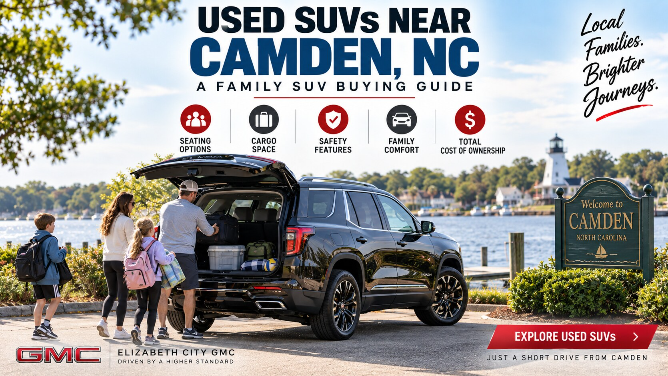
When you're shopping for a family SUV, the number of seats is only the beginning. You also need room for car seats, backpacks, groceries, sports equipment and everything else that comes with everyday family life.
If you're looking for a used SUV near Camden, NC, it's worth comparing more than the model year, mileage and asking price. Two SUVs that look similar online can feel completely different once your family gets inside.
Maybe you need a comfortable vehicle for school drop-offs and commuting to Elizabeth City. Maybe your weekends involve travel sports, visiting family or heading to the Outer Banks. Or maybe your current vehicle simply doesn't have enough room anymore.
Whatever your reason for shopping, this guide will help you compare used family SUVs based on the features and space you'll actually use.
1. Start With the Right SUV Size for Your Family
It's tempting to start with the largest SUV you can afford. But a bigger vehicle isn't automatically the most practical choice.
Think about how many people you carry on a normal day, how much cargo you need and where you regularly park.
Compact SUVs
A compact SUV may be a good fit for a smaller household that wants useful cargo space and a higher seating position without driving a large vehicle.
When comparing compact models, check the rear-seat legroom and how much space remains behind the front seats after they're adjusted for the adults who will drive.
A compact SUV that feels roomy during a solo test drive may feel much tighter once you install a rear-facing car seat.
Midsize SUVs
Midsize SUVs can offer a balance of passenger room, cargo space and everyday maneuverability. Some have two rows of seating, while others offer a third row.
For families who regularly carry children, friends or relatives, a midsize three-row SUV may be worth comparing.
Just remember that third-row space varies considerably between models.
Full-Size SUVs
Full-size SUVs may make sense if you regularly need multiple rows of seating and substantial cargo room, or if your family has specific towing needs.
However, they may also cost more to fuel, insure and maintain. Larger tires and other replacement parts can add to ownership costs.
Choose the size that fits your normal routine, not just the occasional trip when you wish you had more room.
2. Do You Really Need a Third-Row SUV?
A third row can be useful, but it's important to understand how it affects the rest of the vehicle.
In some SUVs, raising the third row leaves relatively little cargo space behind it. In others, the rear seats are better suited to children or occasional passengers than adults.
Before choosing a three-row SUV, ask yourself:
- How often will all three rows be occupied?
- Who will sit in the third row?
- Can passengers get into the back easily?
- How much cargo room remains with the third row in use?
- Will you need to install child safety seats in the second or third row?
- Can the seats be folded or adjusted without much effort?
If your family usually travels with four or five people, a roomy two-row SUV may provide more practical everyday cargo space than a smaller three-row model.
If you're frequently carrying six or seven passengers, the additional seating may be essential.
The key is to evaluate the vehicle with the seats in the positions you'll actually use.
3. Bring Your Car Seats When You Shop
Car-seat fit is one of the most important details for families with younger children, and it's difficult to judge from photographs.
If possible, bring the child safety seats you currently use when you visit the dealership.
Check whether you can install them correctly in the seating positions you need, following both the vehicle owner's manual and the child-seat manufacturer's instructions.
Pay attention to how much front-seat space remains after installing a rear-facing seat.
Also check whether adults and older children can get in and out comfortably without disturbing installed seats.
If you have multiple children, don't assume that a wide-looking rear bench can accommodate three child safety seats side by side. Compatibility depends on the specific vehicle, seating positions and child-seat models.
A family SUV should work with the seats and passengers you have today, not just the number of passengers listed in the advertisement.
4. Compare Cargo Space With Your Everyday Gear
Cargo capacity figures are useful, but they don't always tell you whether your actual belongings will fit.
Think about the things your family regularly carries:
- Strollers
- Sports bags and equipment
- Groceries
- School backpacks
- Coolers
- Vacation luggage
- Pet carriers
- Work equipment
Look at the shape of the cargo area, not just its advertised volume.
Check the height of the load floor, the width between the wheel wells and whether the rear seats fold in a way that suits your needs.
If you regularly use the third row, measure the space behind it with the seats raised.
For families who spend weekends traveling to tournaments or taking road trips, this can be one of the biggest differences between an SUV that looks good on paper and one that's genuinely convenient to own.
5. Compare Safety Features on the Specific SUV
Safety is a major consideration for many family SUV shoppers, but equipment can vary by model year, trim level and optional package.
Don't assume that every vehicle with the same model name includes the same technology.
Depending on the SUV, features worth comparing may include:
- Automatic emergency braking
- Forward collision warning
- Blind-zone monitoring
- Rear cross-traffic alerts
- Lane-keeping assistance
- Adaptive cruise control
- Backup and surround-view cameras
- Parking assistance
Check the actual equipment listed for the individual vehicle and ask for a demonstration of features you don't recognize.
You can also research independent crash-test results for the specific model and model year you're considering.
Remember that driver-assistance systems have limitations. They do not replace an attentive driver or proper child-seat installation.
6. Look for Features That Make Family Life Easier
Some SUV features sound impressive in an advertisement but may not matter much to your family. Others can make a noticeable difference every day.
Think about how you actually use your vehicle.
Rear Climate Controls
Rear passengers may appreciate dedicated climate controls or additional air vents, especially during North Carolina summers.
Power Liftgate
A power liftgate can be convenient when loading groceries, luggage or sports equipment. Check that it operates properly and that you have enough clearance where you normally park.
USB Ports and Charging
If your family regularly takes longer drives, check how many charging ports are available and where they're located.
Easy-to-Clean Interior
Consider the condition and practicality of the seating materials, floor mats and cargo area.
Also check for excessive wear, damaged trim and unusual odors. A family SUV will see plenty of everyday use, so choose an interior you can comfortably maintain.
Parking and Visibility
A larger SUV may offer more room, but you still need to feel comfortable parking it at school, the grocery store and in your driveway.
Test the backup camera, mirrors and any available parking-assistance features.
7. Don't Let a Clean Interior Replace a Proper Inspection
A freshly detailed SUV can make a strong first impression. But its mechanical condition and maintenance history matter much more than how shiny the dashboard looks.
Before buying, review the available maintenance records and vehicle-history information.
Pay attention to:
- Routine oil changes and scheduled maintenance
- Transmission and drivetrain service, when applicable
- Tire condition and uneven wear
- Brake condition
- Fluid leaks
- Unusual engine or suspension noises
- Accident or damage history
- Signs of water intrusion
- Outstanding recalls
A vehicle-history report may not include every accident or repair, so it should not replace a physical inspection.
If you have questions about a used SUV's condition, consider having a qualified independent mechanic perform a pre-purchase inspection.
Does Mileage Matter?
Yes, but mileage alone doesn't determine whether an SUV is a good purchase.
A higher-mileage vehicle with consistent maintenance may be worth considering alongside a lower-mileage SUV with limited service records.
Focus on condition, maintenance, price and the vehicle's expected future needs rather than choosing solely by the odometer reading.
8. Set a Family SUV Budget That Works Beyond the Monthly Payment
When you're shopping for a family vehicle, it's easy to focus on the monthly payment and overlook the other expenses that come with ownership.
Before choosing an SUV, consider:
- Purchase price
- Loan interest rate and term, if financing
- Taxes and fees
- Insurance
- Fuel
- Routine maintenance
- Tire and brake replacement
- Potential repairs
Don't assume that a lower monthly payment always means a less expensive vehicle. Extending a loan can reduce the payment while increasing the total interest paid.
Also think about whether a larger SUV's additional space is worth its potential increase in ongoing costs.
The goal is to find a vehicle that comfortably handles your family's needs without putting unnecessary pressure on your household budget.
9. Check Your Current Vehicle's Trade Value
If you're replacing your current car, truck or SUV, its value may affect how much you need to finance on your next purchase.
Find out approximately what your vehicle is worth and request a current loan payoff if you still owe money on it.
That will help you understand whether you have positive equity, negative equity or a vehicle you own outright.
You can start with our KBB Instant Cash Offer tool before deciding what to do with your current vehicle.
10. Make the Test Drive a Family Test Drive
A test drive should tell you more than whether the SUV accelerates smoothly.
If possible, bring the family members who will regularly ride in it and have them try their usual seating positions.
During the drive, pay attention to:
- Driver visibility and seat comfort
- Rear-seat comfort
- Road and wind noise
- Steering and braking
- Ride quality over uneven pavement
- Ease of parking
- How the vehicle feels at normal road speeds
- Whether any warning lights appear
After the drive, spend time with the SUV parked.
Open the liftgate. Fold the seats. Check the cupholders, charging ports and storage compartments. Connect your phone and test the climate controls.
These may seem like small details, but they're the things you'll interact with every day.
Shopping for Used Family SUVs Near Camden, NC
If you're shopping in Camden County, expanding your search to nearby Elizabeth City can give you additional used SUVs to compare.
At Elizabeth City GMC, you can browse our current used inventory online before visiting. Inventory changes, so contact our team to confirm that a particular SUV is available and arrange a time to see it.
Whether you're considering a compact SUV for commuting, a midsize SUV with extra passenger space or a full-size SUV for a larger family, start with the seating, cargo room and features you actually need.
Then compare the condition, maintenance history and total cost of the individual vehicles that fit those requirements.
The right family SUV is the one that works for your passengers, your everyday routine and your budget.
Frequently Asked Questions About Used Family SUVs
What is the best size SUV for a family?
It depends on how many passengers you regularly carry, whether you use child safety seats and how much cargo space you need. Compare compact, midsize and full-size SUVs with your normal passenger and cargo requirements in mind.
Is a third-row SUV worth buying?
A third row can be useful if you regularly carry more than five passengers. If you rarely need the extra seats, a roomy two-row SUV may provide more practical cargo space for everyday use.
Should I bring my car seats when shopping for an SUV?
Yes. Bringing your existing child safety seats allows you to check whether they can be installed correctly in the positions you need and whether the remaining passenger space works for your family.
What should I check when buying a used family SUV?
Check passenger room, cargo space, safety equipment, maintenance history, tire and brake condition, accident history, overall mechanical condition and total ownership costs. Consider an independent pre-purchase inspection.
Do I need AWD in a family SUV?
Not necessarily. AWD may provide additional traction in certain driving conditions, but a front-wheel-drive SUV may meet the needs of families who primarily travel on paved roads. Consider your normal driving conditions and the specific vehicle's capabilities.
Is a used SUV with 100,000 miles too old for a family vehicle?
Not automatically. Maintenance history, mechanical condition, previous use and price matter more than mileage alone. Have the vehicle inspected and consider its likely future maintenance needs.
Where can I shop for used SUVs near Camden, NC?
You can browse available used SUVs at Elizabeth City GMC online and contact the dealership to confirm availability or schedule a test drive before visiting.
Find Your Next Family SUV Near Camden
Ready to compare your options? Browse our current used inventory and make a list of the SUVs that offer the seating, cargo space and features your family needs.
If you find one you'd like to see, contact our team to confirm availability and arrange a test drive. Bring your family and the everyday gear you need the SUV to accommodate.
Browse Used Cars, Trucks & SUVs
Find Out What Your Trade Is Worth
Elizabeth City GMC
1197 Highway 17 South
Elizabeth City, NC 27909
Categories:
Used Car Buying Guides