

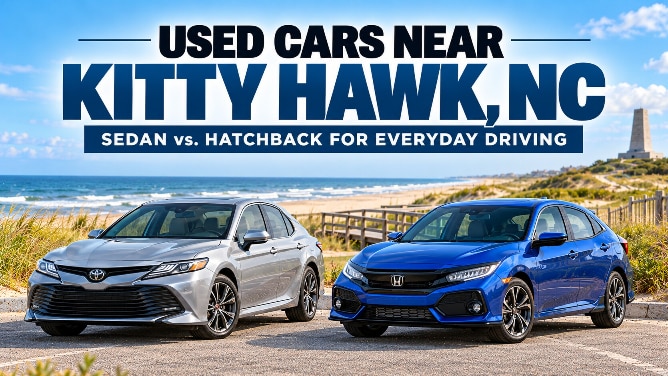
When you're shopping for a used car near Kitty Hawk, NC, it's easy to focus on price, mileage and features. But there's another decision worth making early: would a sedan or a hatchback work better for your everyday driving?
Both can be practical choices for commuting, errands and weekend trips. The biggest difference isn't necessarily how they drive. It's how the vehicle's shape affects cargo access, passenger space and the things you can comfortably carry.
If you're deciding between the two, start with what you need your next car to do. Here's how to compare sedans and hatchbacks without paying for space or features you won't use.
1. What's the Difference Between a Sedan and a Hatchback?
A sedan typically has a separate, enclosed trunk behind the passenger cabin. A hatchback has a rear door that lifts to open a cargo area connected to the cabin.
That difference changes how you load the car and what you may be able to fit inside it.
A sedan may appeal to you if you want a traditional trunk for groceries, luggage and other everyday items. A hatchback may be more convenient if you regularly carry bulky objects that are difficult to fit through a trunk opening.
Neither body style is automatically more spacious, more fuel-efficient or easier to park. Those details depend on the specific make, model and model year you're comparing.
Start with the shape of the cargo area, then compare the actual vehicles.
2. Cargo Space: Don't Look at the Numbers Alone
Published cargo-capacity figures are useful, but they don't tell the whole story. The size and shape of the opening can matter just as much as the amount of space behind it.
When a Sedan's Trunk May Work Well
If you mostly carry grocery bags, a few suitcases, a work bag or sports equipment that fits easily through the trunk opening, a sedan may provide all the room you need.
Before buying, open the trunk and check its depth, width and height. Look for hinges or other parts that extend into the cargo area, and see whether the rear seats fold down if you occasionally need extra room.
When a Hatchback May Be More Convenient
A hatchback's liftgate can make it easier to load certain bulky items. Folding the rear seats may also create a larger, more flexible cargo area, depending on the model.
That flexibility can be useful if you sometimes carry a cooler, a pet carrier, a stroller or luggage for a weekend away.
Keep in mind that folding the rear seats reduces the number of passengers you can carry. Check how much cargo space remains when the seats are in their normal positions.
Try Your Real-World Cargo
Think about the largest item you carry regularly. If possible, measure it before visiting the dealership and compare those measurements with the vehicle's cargo opening and interior dimensions.
For everyday life near Kitty Hawk, that might mean checking whether your usual grocery haul, beach bags or travel luggage fits without rearranging the entire car.
A cargo area that works for your routine is more useful than a larger advertised capacity you can't easily access.
3. Check Passenger Room With Everyone Seated
A car can look roomy from the outside and still feel tight once the driver and passengers are seated.
Adjust the front seats to the positions you'll actually use, then sit in the back. Check legroom, headroom and how easy it is to get in and out.
If you regularly drive with children, consider how easily you can access the rear seats and whether your child safety seats can be installed correctly according to the vehicle and child-seat manufacturers' instructions.
Don't assume that a hatchback has less passenger room than a sedan or that a sedan has a more comfortable back seat. Compare the individual vehicles.
Also pay attention to how much cargo space is available when every passenger seat you need is occupied. That matters more than the maximum cargo capacity with the seats folded.
4. Which Is Easier to Park and Maneuver?
If you spend a lot of time in parking lots, driveways or tighter parking spaces, the overall length of a vehicle may matter more than whether it has a trunk or liftgate.
Some hatchbacks are shorter than comparable sedans, but that's not true of every model. Compare the actual dimensions and how each car feels from the driver's seat.
During a test drive, pay attention to:
- Visibility when backing up
- How easily you can judge the front and rear of the car
- Turning and maneuvering in a parking lot
- Rear-window visibility with passengers or cargo aboard
- How much room the trunk lid or liftgate needs to open
A rearview camera can be helpful, but you should still check your surroundings and use your mirrors when maneuvering.
If the car will be parked in a garage or under a low overhang, make sure there's enough clearance to open a hatchback's liftgate fully.
5. Compare Fuel Costs and the Cost of Ownership
Both sedans and hatchbacks are available with a range of engines and fuel-economy ratings. Body style alone won't tell you which vehicle will cost less to drive.
When comparing used cars, look at the fuel-economy rating for each specific model, year and powertrain. Then consider how much you drive in a typical week.
Also compare the costs that continue after the purchase:
- Insurance
- Routine maintenance
- Tires and brakes
- Potential repairs
- Registration and other applicable fees
- Loan interest, if you're financing
A lower purchase price can be appealing, but it shouldn't be your only consideration. A car with deferred maintenance or worn tires may need additional spending soon after you buy it.
If you're trading in your current vehicle, you can start by checking its value through our KBB Instant Cash Offer tool.
6. Focus on Features That Improve Your Daily Drive
It's easy to get distracted by a long equipment list. Instead, decide which features would make a noticeable difference in how you use your car.
Depending on your needs, those might include:
- Comfortable, adjustable front seats
- Apple CarPlay or Android Auto compatibility
- USB charging ports
- Automatic climate control
- Blind-spot monitoring or other available driver-assistance features
- Easy-to-use rear-seat folding controls
- A cargo cover or other storage features
Features and their operation vary by vehicle. Confirm that the equipment listed in an advertisement is present and working on the specific used car you're considering.
Don't pay extra for a feature simply because it sounds impressive. Choose the car that offers the equipment you'll actually appreciate on a normal Tuesday, not just during a test drive.
7. The Condition of the Used Car Matters More Than Its Body Style
Once you've narrowed your choice to a sedan or hatchback, focus on the condition of the individual vehicle.
Two cars of the same model year with similar mileage can have very different maintenance histories and wear.
Review the Vehicle's History and Maintenance
Ask about available service records and review the vehicle-history report. Look for evidence of routine maintenance and note any reported accidents or title concerns.
A vehicle-history report is helpful, but it may not include every repair or incident.
Inspect the Exterior and Interior
Check the tires for uneven wear, look for warning lights and test the windows, locks, climate controls and other features.
Open and close the trunk or liftgate several times. On a hatchback, inspect the liftgate hinges, seals and struts. On a sedan, check the trunk opening, latch and weather seals.
Look for damp carpeting, unusual odors or other signs of water intrusion. If the vehicle has spent time in a coastal environment, have a qualified mechanic check for significant corrosion as part of a pre-purchase inspection.
Consider an Independent Inspection
Before purchasing a used car, an independent pre-purchase inspection can help identify mechanical or condition concerns that may not be obvious during a short test drive.
The goal isn't to find a car with no signs of use. It's to understand the condition of the vehicle you're buying and whether any needed repairs fit your budget.
8. Test-Drive a Sedan and a Hatchback Before Deciding
If you're still unsure which body style fits you, drive one of each. A few minutes behind the wheel and a closer look at the cargo area can tell you more than photos alone.
Try to evaluate both cars using the same questions:
- Can I find a comfortable driving position?
- Can my usual passengers sit comfortably?
- Can I see clearly when changing lanes and backing up?
- Does the ride feel comfortable on the roads I normally use?
- Can I load the items I carry most often?
- Is the trunk or liftgate easy for me to open and close?
- Does the vehicle's condition match my expectations?
Take a few notes after each drive. When you're comparing multiple used cars, it's easy to forget which one had the better rear-seat space or more convenient cargo opening.
You may find that you prefer a sedan's trunk for your routine, or that a hatchback's flexible cargo area makes everyday errands easier. Either conclusion is useful because it's based on how you'll use the car.
9. Shopping for Used Cars Near Kitty Hawk, NC
If you're looking for a used car near Kitty Hawk, expanding your search to Elizabeth City gives you another place to compare available sedans, hatchbacks and other pre-owned vehicles.
At Elizabeth City GMC, you can browse our current used inventory online before visiting. Inventory changes, so the specific makes, models and body styles available may vary.
Start by comparing the vehicles that fit your budget and passenger needs. Then look more closely at cargo access, comfort, maintenance history and condition.
If a particular vehicle catches your eye, contact our team to confirm availability and arrange a test drive before making the trip.
Whether you choose a sedan or hatchback, the right used car is the one that fits your everyday routine and gives you confidence in what you're buying.
Frequently Asked Questions About Sedans and Hatchbacks
Is a hatchback better than a sedan for carrying luggage?
A hatchback may be easier to load with bulky luggage because of its larger rear opening. A sedan may work just as well for smaller suitcases and everyday bags. Compare the shape and usable space of the specific vehicles.
Are hatchbacks always smaller than sedans?
No. Vehicle dimensions vary by make and model. Compare overall length, passenger space and cargo dimensions rather than assuming one body style is always smaller.
Which is better for commuting, a sedan or a hatchback?
Either can be a practical commuter car. Compare seat comfort, visibility, fuel economy, driving feel and ownership costs for the specific models you're considering.
Do hatchbacks get better gas mileage than sedans?
Not necessarily. Fuel economy depends on the specific vehicle, engine, transmission and other factors. Check the rating for each model and model year you're comparing.
What should I check before buying a used sedan or hatchback?
Review available maintenance records and vehicle history, inspect the tires and interior, test the vehicle's features, and take a thorough test drive. Consider an independent pre-purchase inspection before buying.
Where can I find used cars near Kitty Hawk, NC?
You can browse the current used inventory at Elizabeth City GMC online and contact the dealership to confirm whether a sedan, hatchback or other vehicle you're interested in is available.
Find a Used Car That Fits Your Everyday Life
You don't have to decide between a sedan and a hatchback based on looks alone. Compare how each vehicle handles your passengers, cargo and daily drive, then choose the individual used car that fits your needs and budget.
Find Out What Your Trade Is Worth
Elizabeth City GMC
1197 Highway 17 South
Elizabeth City, NC 27909
Categories:
Used Car Buying Guides