

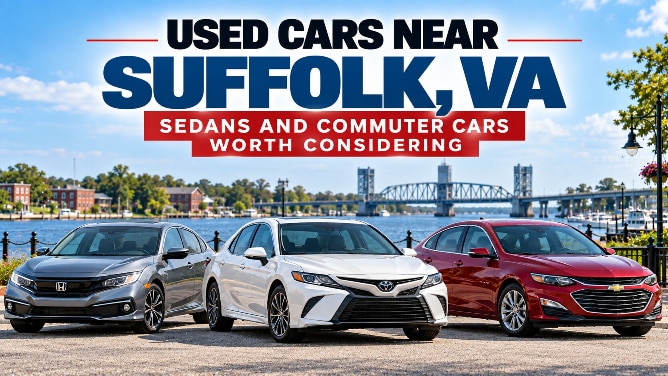
If you're shopping for a used car near Suffolk, VA, you might not need a large SUV or pickup truck. You may simply want a comfortable, dependable vehicle that gets you to work, handles everyday errands and fits your budget.
A used sedan or compact car can be worth considering for that kind of driving. But finding the right one takes more than comparing gas mileage and the price on the windshield.
Some cars offer more rear-seat room than you might expect. Others have smaller trunks, firmer rides or maintenance needs that aren't obvious in an online listing. And a vehicle that feels comfortable during a quick drive around the block may feel different during a longer commute.
Here's how to compare used sedans and commuter cars based on the things you'll notice after you bring one home.
1. Start With the Drive You Make Most Often
Before narrowing your search to a particular make or model, think about your normal week.
Do you spend most of your time on highways, local streets or a combination of both? Do you usually drive alone, or do you carry passengers? Is your commute short, or do you spend enough time behind the wheel that seat comfort and road noise make a noticeable difference?
Write down the things your current vehicle does well and what you'd like your next one to improve.
- Longer commutes: Pay attention to seat support, ride comfort, road noise and fuel costs.
- Frequent errands: Consider visibility, parking ease, trunk access and cabin storage.
- Regular passengers: Check rear-seat legroom, headroom and entry and exit.
- Occasional road trips: Think about luggage space, highway comfort and the features you'll use on longer drives.
A car that fits your actual routine is more useful than one chosen solely because it has the lowest mileage or the most features.
2. Compact or Midsize Sedan: Which Fits Your Needs?
Used-car listings often group sedans together, but vehicle size can make a real difference in daily use.
Compact Sedans
A compact sedan may appeal to someone who wants a manageable vehicle for commuting, parking and running errands.
Before choosing one, check whether the driver's seat adjusts far enough for you to sit comfortably. If you carry passengers, have them try the rear seat with the front seats positioned as they would be during a normal drive.
Also open the trunk. A compact sedan may have enough room for your usual groceries or work bag but less space for larger luggage or bulky equipment.
Midsize Sedans
A midsize sedan may offer more passenger room or a different ride and seating experience. That can matter if you regularly carry adults in the back or spend a lot of time driving.
Don't assume every midsize car is more comfortable than every compact car, though. Seat design, suspension, tire choice and the individual vehicle's condition all affect how it feels.
Compare the space you actually use. If you're comfortable in a compact sedan and its trunk handles your everyday needs, you may not need a larger vehicle. If rear-seat room is a priority, test both sizes before deciding.
3. Look Beyond the Advertised Gas Mileage
Fuel economy matters when you drive regularly, but an estimated miles-per-gallon figure is only one part of the comparison.
Actual fuel use can vary with traffic, driving habits, weather, vehicle condition and the mix of highway and city driving.
When comparing used cars, check the fuel-economy estimates for the specific model year, engine and drivetrain. Also confirm whether the vehicle requires regular or premium gasoline.
If you're considering a hybrid, review its maintenance history and have the vehicle's hybrid components evaluated as appropriate for its age and condition.
To put fuel economy into perspective, consider how many miles you drive in a typical month. A small difference in fuel use may matter more to someone with a long daily commute than to someone who drives only a few miles each day.
At the same time, don't overlook purchase price, insurance and maintenance just to get a higher fuel-economy rating.
4. Everyday Comfort Is Worth Testing
It's easy to focus on a car's appearance and features when browsing online. But once you own it, you'll spend most of your time sitting in the driver's seat.
During your visit, take a few minutes to check the details that affect comfort:
- Can you adjust the seat and steering wheel to a comfortable position?
- Can you see clearly through the windshield and mirrors?
- Are the pedals and commonly used controls easy to reach?
- Does the seat provide enough support for your usual driving time?
- How much road and wind noise do you notice?
- Does the suspension feel comfortable on the roads you normally travel?
If another household member will regularly drive the car, have them adjust the seat and take a test drive too.
A commuter car should feel comfortable for the people who will actually use it, not just look good in the driveway.
5. Choose Technology and Safety Features You'll Use
Used sedans can have very different equipment, even when they're the same make and model. Features may vary by model year, trim level and optional package.
Depending on your needs, you may want to compare:
- Apple CarPlay or Android Auto compatibility
- Bluetooth connectivity
- Backup cameras
- Blind-zone monitoring
- Automatic emergency braking
- Adaptive cruise control
- Heated seats
- Remote start
- USB charging ports
If a particular feature matters to you, confirm that the individual car has it and test it before buying.
Driver-assistance systems can have limitations and do not replace attentive driving. Review the owner's manual to understand how the features on a particular vehicle operate.
It's also worth checking the controls for the features you use most. A touchscreen that looks impressive in photos may not be as convenient for you as a simpler layout with easy-to-reach buttons.
6. Compare Mileage Alongside Maintenance History
When two used cars are similarly priced, it's tempting to choose the one with fewer miles. Mileage matters, but it doesn't tell you how the car was maintained or what condition it's in today.
Review the available service records and ask about routine maintenance, previous repairs and any known concerns.
Consider how the vehicle's age and mileage relate to its maintenance schedule. Depending on the model, certain services or replacement parts may be due based on time, mileage or both.
A lower-mileage car may still need attention if maintenance was delayed. A higher-mileage car with documented service may be worth comparing if its condition and price make sense for your needs.
Rather than setting an arbitrary mileage cutoff, compare the condition, history and expected maintenance of the specific cars you're considering.
7. Inspect the Car, Not Just Its Online Photos
Good photos help you decide which cars to see in person, but they can't tell you everything about a vehicle's condition.
Before buying, take time to inspect the car and review the available vehicle-history information.
Exterior and Tires
- Check for visible body damage or signs of previous repairs.
- Look for uneven tire wear, damaged tires or mismatched tire specifications.
- Inspect the headlights, taillights, windshield and mirrors.
- Look underneath for visible leaks, damage or significant corrosion.
Interior and Electronics
- Test the air conditioning, heat, windows and door locks.
- Check the seats, seat belts and interior trim.
- Try the infotainment system and phone connectivity.
- Watch for warning lights that remain illuminated after startup.
- Pay attention to unusual odors or signs of moisture.
Mechanical Condition
Listen for unusual engine, suspension or brake noises. Notice how the transmission shifts and whether the vehicle accelerates and brakes smoothly.
A vehicle-history report may not contain every accident, repair or maintenance visit. If you're seriously considering a car, an inspection by a qualified independent mechanic can help identify issues that may not be obvious during a short test drive.
8. Compare the Full Cost of Owning the Car
A car with an attractive asking price may still be more expensive to own than another option.
Before deciding, consider:
- The total purchase price, including applicable taxes and fees
- Insurance for the specific vehicle
- Fuel costs based on your driving
- Routine maintenance
- Upcoming tire or brake replacement
- Potential repairs
- Loan interest and total payments, if financing
Ask your insurance provider for a quote on the car you're considering. If financing, review the annual percentage rate, loan term, amount financed and total of payments rather than comparing monthly payments alone.
If you're replacing a current vehicle, its trade-in value may also affect your budget. You can start with our KBB Instant Cash Offer tool to explore that part of the purchase.
The goal is to choose a car you can comfortably afford to drive and maintain, not simply one with an appealing payment.
9. Take a Test Drive That Reflects Your Commute
A quick loop around a parking lot won't tell you much about how a car feels during your normal drive.
When possible, test the vehicle on a mix of roads that reflects how you'll use it. Pay attention to steering, braking, acceleration, visibility, ride comfort and road noise.
Try parking it. Check how easily you can get in and out. If you carry passengers regularly, have them sit in their usual positions.
After the drive, open the trunk and check the interior storage. Connect your phone, test the climate controls and make sure the features you care about work as expected.
If you're comparing several cars, make a few notes after each drive. It's easier to spot meaningful differences when you record them while they're fresh.
10. Buying a Used Car in North Carolina When You Live in Virginia
If you live in Suffolk, you can include vehicles at North Carolina dealerships in your search. Before traveling to see a particular car, confirm its availability and ask for a written breakdown of the purchase terms.
Because the dealership and your home address are in different states, ask how title, registration, applicable taxes and fees will be handled for your specific transaction.
Confirm which paperwork the dealership will prepare and whether you'll need to complete any steps directly with the Virginia DMV. Contact your insurance provider to arrange the coverage and documentation needed before taking delivery.
Taking care of those questions in advance makes it easier to compare the total purchase cost and plan your visit.
Explore Used Cars Near Suffolk, VA
If you're searching for a sedan or commuter car near Suffolk, expanding your search to Elizabeth City gives you another place to compare available vehicles.
At Elizabeth City GMC, you can browse our current used inventory online and review the details of individual cars before visiting.
Start with the vehicles that fit your budget and everyday driving needs. Then compare their mileage, equipment, condition and maintenance history.
Inventory changes, so contact our team to confirm that a particular vehicle is available and arrange a test drive before making the trip.
Frequently Asked Questions About Used Sedans and Commuter Cars
Is a sedan a good choice for commuting?
A sedan may be a practical choice if its passenger room, cargo space, comfort and operating costs fit your needs. Compare individual vehicles and test-drive them on roads similar to your usual commute.
Should I buy a compact or midsize used sedan?
Consider how many passengers you carry, how much trunk space you need and how comfortable each vehicle feels. Test both sizes rather than choosing based on the vehicle category alone.
Does lower mileage mean a used car is more reliable?
Not necessarily. Mileage is one factor, but maintenance history, current condition and previous use also matter. Review the records and consider an independent inspection.
What features should I look for in a commuter car?
Focus on the features you'll use regularly, such as comfortable seating, clear visibility, phone connectivity and any driver-assistance equipment you prefer. Verify the equipment on the specific vehicle.
How do I compare the fuel costs of two used cars?
Check the fuel-economy estimates for each car's model year, engine and drivetrain. Consider your typical mileage, driving conditions and the type of fuel each vehicle requires.
Should I get a used car inspected before buying it?
An independent pre-purchase inspection can help identify mechanical or other condition concerns that may not be apparent from photos, a history report or a short test drive.
Can I buy a used car from Elizabeth City GMC if I live in Suffolk, VA?
Yes. Before purchasing, confirm the car's availability, the complete purchase breakdown and how title, registration, taxes and insurance documentation will be handled for your transaction.
Find a Used Car That Fits Your Everyday Drive
Whether you're replacing an older commuter car or choosing your next sedan, focus on how the vehicle fits your routine. Compare comfort, condition, maintenance history and ownership costs before making a decision.
Browse our current inventory, and if you find a car you'd like to see, contact us to confirm availability and arrange a test drive.
Browse Used Cars, Trucks & SUVs
Find Out What Your Trade Is Worth
Elizabeth City GMC
1197 Highway 17 South
Elizabeth City, NC 27909
Categories:
Used Car Buying Guides