

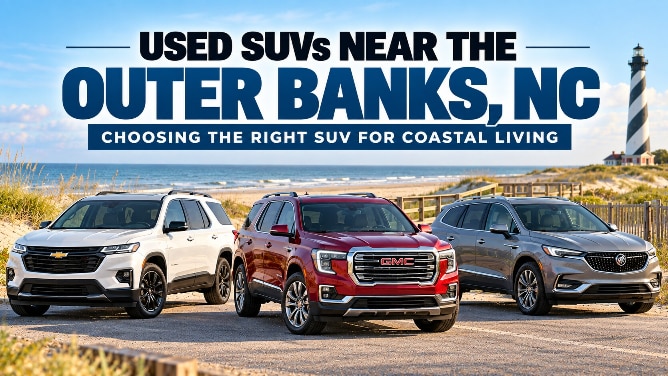
Living on or visiting the Outer Banks can put a lot of different demands on your vehicle. One day, you're driving to work or running errands. The next, you're loading up the family, luggage, coolers and everything else you need for a weekend away.
If you're shopping for a used SUV near the Outer Banks, NC, the right choice depends on more than how many seats it has or whether it's equipped with all-wheel drive. You'll want to think about passenger comfort, cargo space, everyday driving costs and the condition of the individual vehicle.
You may also want to pay closer attention to signs of corrosion or sand-related wear, particularly if a used SUV has spent significant time in a coastal environment.
Here's how to narrow your options and find an SUV that fits the way you actually drive.
1. Start With Your Everyday Driving Needs
Before comparing SUV models, think about what your vehicle needs to handle most of the time.
Do you regularly carry children or other passengers? Do you need space for work equipment, sports bags or pets? Are you looking for a comfortable daily driver, or do you often travel with a full load of people and luggage?
Make a short list of the things your current vehicle does well and the things you wish it did better.
- Daily commuting: Consider seat comfort, visibility, fuel costs and ease of parking.
- Family transportation: Check rear-seat room, child-seat compatibility and convenient access to the back seats.
- Travel and recreation: Think about luggage space, cargo access and room for the gear you regularly carry.
- Occasional towing: Verify the specific vehicle's towing rating and required equipment before buying.
Knowing your priorities will help you avoid paying more for an SUV that's larger or more heavily equipped than you need.
2. Choose an SUV Size That Fits Your Routine
Compact, midsize and full-size SUVs can all be useful near the Outer Banks, but they offer different combinations of passenger room, cargo capacity and everyday convenience.
Compact SUVs
A compact SUV may be worth considering if you want a vehicle that's easy to maneuver and park while still offering more cargo flexibility than a traditional sedan.
Check rear-seat space carefully if you carry passengers or use child safety seats. A compact SUV that feels roomy from the driver's seat may feel tighter once the front seats are adjusted for taller adults.
Midsize SUVs
A midsize SUV may provide a useful balance of passenger space and cargo room. Some models offer a third row, although the space available in that row and behind it varies.
If you're considering a three-row model, try every seating position and check how much room remains for luggage when all the seats are occupied.
Full-Size SUVs
A full-size SUV may make sense if you regularly carry a larger group, need substantial cargo space or have specific towing requirements.
Before choosing one, consider where you'll park it and whether its fuel, insurance and maintenance costs fit your budget.
The right size is the one that comfortably handles your usual passengers and cargo, not necessarily the largest SUV you can afford.
3. Check Cargo Space With the Seats You'll Actually Use
Cargo capacity figures can help you compare SUVs online, but they don't always show whether your belongings will fit the way you need them to.
Think about what you regularly load into your vehicle:
- Groceries and everyday shopping
- Coolers and beach bags
- Strollers or child-related gear
- Sports equipment
- Suitcases and weekend luggage
- Pet carriers
- Work supplies or tools
If you're considering a three-row SUV, check the cargo area with the third row raised. Some vehicles offer plenty of space with the rear seats folded but much less room when every seat is occupied.
Also check the cargo opening, load-floor height and whether the rear seats fold in a way that works for your needs.
If you already own a stroller, cooler or other bulky item that you carry often, bring its measurements when you shop. It's a simple way to find out whether the SUV will work for your everyday routine.
4. Compare Comfort for Daily Driving and Longer Trips
An SUV may feel comfortable during a short drive around a parking lot but feel different after an extended trip.
When comparing vehicles, spend time in the driver's seat and check how easily you can adjust the seat, steering wheel and mirrors.
Pay attention to:
- Seat support and driving position
- Visibility through the windshield and side windows
- Road and wind noise
- Ride quality over uneven pavement
- Rear-seat legroom and headroom
- Air conditioning and rear climate vents
- Phone connectivity and charging ports
If your family will regularly ride in the SUV, have them try their usual seating positions. For younger children, bring your child safety seats and confirm that they can be installed correctly according to the vehicle and child-seat manufacturers' instructions.
Features such as a power liftgate, heated or ventilated seats and additional charging ports may be convenient, but prioritize the ones your household will actually use.
5. Pay Attention to Corrosion and Signs of Coastal Wear
When shopping for a used vehicle that may have spent time near the coast, it's worth looking closely at its overall condition.
Salt exposure can contribute to corrosion, particularly on metal components that are difficult to see during a quick walkaround. That doesn't mean a vehicle from a coastal area is automatically in poor condition. It means a careful inspection is important.
Look Underneath the SUV
Check for significant corrosion or visible damage around the frame or underbody structure, suspension components, brake lines and other exposed metal parts.
Some surface rust may be cosmetic, while more extensive corrosion can require further evaluation. A qualified mechanic can help distinguish between the two.
Check the Interior for Moisture
Look for unusual odors, damp carpeting, water stains or signs of moisture in the cargo area and under floor mats.
Ask about any evidence of previous water intrusion. If you suspect flood damage, have the vehicle inspected before making a purchase.
Inspect the Tires and Moving Parts
Look for uneven tire wear, damaged tires and unusual noises from the suspension or drivetrain during the test drive.
If a vehicle has been used frequently on sandy or unpaved surfaces, ask about its previous use and maintenance. A vehicle-history report may provide useful information, but it won't reveal every condition issue.
For any used SUV you're seriously considering, an independent pre-purchase inspection can help identify concerns that aren't obvious in photos or during a short drive.
6. Do You Need an AWD SUV Near the Outer Banks?
All-wheel drive can provide additional traction in certain driving conditions, but not every driver needs it.
If most of your driving takes place on paved roads, a front-wheel-drive SUV may meet your everyday needs. If you regularly encounter slippery or uneven surfaces, you may want to compare AWD-equipped vehicles.
Keep in mind that AWD systems differ between models. Tires, ground clearance and the vehicle's overall design also affect how it performs.
AWD doesn't guarantee shorter stopping distances or prevent hydroplaning. Proper tires, appropriate speed and attentive driving remain essential.
If you're deciding between AWD and four-wheel drive, consider the surfaces you actually drive on and review the capabilities of the specific vehicles on your list.
7. Don't Assume an AWD SUV Is Suitable for Beach Driving
Beach driving is a separate consideration from ordinary paved-road driving. Soft sand can place different demands on a vehicle, and an AWD badge alone doesn't mean an SUV is designed or permitted to travel on the beach.
If beach driving is one of your reasons for buying an SUV, check the requirements for the exact beach access area you intend to use. Vehicle rules, permits and access conditions can differ by location and may change.
Then review the vehicle owner's manual to confirm whether the manufacturer considers the SUV suitable for those conditions.
Don't rely on a salesperson's general description of an SUV as “all-wheel drive” or “off-road capable.” Verify the specific vehicle's equipment, limitations and suitability before buying it for that purpose.
8. Consider What the SUV Will Cost Beyond the Purchase Price
A used SUV that fits your family and cargo needs also needs to fit your household budget.
Before deciding, compare the total cost of each vehicle you're considering, including:
- Purchase price and applicable taxes and fees
- Insurance
- Fuel
- Routine maintenance
- Tire and brake replacement
- Potential repairs
- Loan interest, if financing
Larger SUVs may have different fuel, tire and maintenance costs than smaller models. AWD-equipped versions may also have different service requirements from two-wheel-drive versions.
Review the maintenance schedule for the specific model and get an insurance quote before making your decision.
If you're replacing your current vehicle, its trade-in value may affect your purchase budget. You can begin with our KBB Instant Cash Offer tool.
The goal is to find an SUV you can comfortably purchase, drive and maintain over time.
9. Make Your Test Drive Reflect Real Life
A useful test drive should help you decide whether an SUV fits your everyday routine, not just whether you like how it looks.
Start by adjusting the driver's seat and mirrors. Check visibility, steering, braking, acceleration and how the SUV feels at normal road speeds.
After the drive, park the vehicle and spend time with the features and spaces you'll use regularly.
- Have passengers try their usual seats.
- Open the liftgate and check the cargo area.
- Fold and raise the rear seats.
- Test the air conditioning and other cabin controls.
- Connect your phone if that feature matters to you.
- Check how comfortably you can park and maneuver the vehicle.
If you're comparing several SUVs, take notes after each test drive. It's easier to identify the differences that matter when you don't have to rely on memory.
10. Shopping for Used SUVs Near the Outer Banks, NC
If you're searching for a used SUV on the Outer Banks, expanding your search to Elizabeth City gives you another place to compare available vehicles.
At Elizabeth City GMC, you can browse our current used inventory online before visiting.
Start by narrowing your options to the SUVs that fit your passenger needs, cargo requirements and budget. Then compare the equipment, maintenance history and condition of the individual vehicles.
Inventory changes, so contact our team to confirm that an SUV you're interested in is available and arrange a test drive before making the trip.
Whether you're looking for a compact SUV for everyday errands, a midsize SUV for family transportation or a larger vehicle for frequent trips with passengers and gear, choose the one that works for the way you actually live.
Frequently Asked Questions About Used SUVs Near the Outer Banks
What size SUV is practical for living near the Outer Banks?
It depends on how many passengers you carry, how much cargo space you need and where you normally drive and park. Compare compact, midsize and full-size SUVs based on your everyday routine rather than choosing by size alone.
Should I buy an AWD SUV for coastal driving?
Not necessarily. AWD may provide additional traction in certain conditions, but a two-wheel-drive SUV may meet your needs if you primarily drive on paved roads. Compare the specific vehicle's capabilities with your normal driving conditions.
Can I drive any AWD SUV on the beach?
No. AWD does not automatically make a vehicle suitable or permitted for beach driving. Check the rules for the specific access area and the vehicle manufacturer's operating guidance before buying an SUV for that purpose.
What should I inspect on a used SUV from a coastal area?
Pay attention to significant underbody corrosion, signs of water intrusion, tire condition, suspension wear and maintenance history. Consider having a qualified independent mechanic inspect the vehicle before purchasing.
Is a three-row SUV worth buying for family trips?
A third row can be useful if you regularly carry more passengers. Check how much cargo space remains when the third row is raised, and make sure the rear seating positions are practical for the people who will use them.
Does lower mileage always mean a better used SUV?
No. Mileage is one factor, but maintenance history, mechanical condition, previous use and price also matter. Compare individual vehicles and consider an independent inspection.
Where can I shop for used SUVs near the Outer Banks, NC?
You can browse the current used inventory at Elizabeth City GMC online, compare available SUVs and contact our team to confirm availability before visiting.
Find Your Next Used SUV at Elizabeth City GMC
The right used SUV should make your everyday driving easier while providing the passenger room, cargo space and comfort you need for the trips you enjoy.
Browse our available vehicles, compare their features and condition, and contact us when you're ready to take a closer look.
Browse Used Cars, Trucks & SUVs
Find Out What Your Trade Is Worth
Elizabeth City GMC
1197 Highway 17 South
Elizabeth City, NC 27909
Categories:
Used Car Buying Guides