

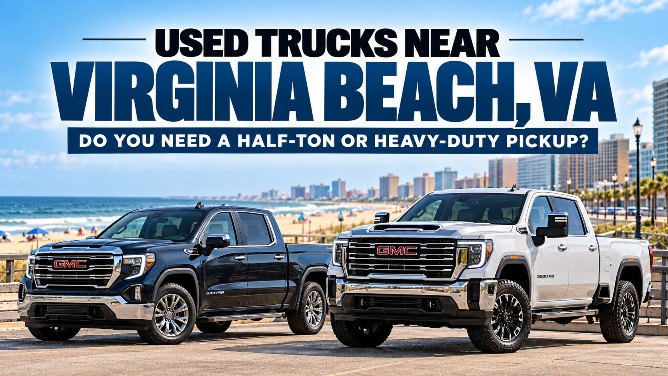
If you're shopping for a used truck near Virginia Beach, VA, one of the first decisions you'll face is whether you need a half-ton pickup or a heavy-duty truck. Both can be useful for work, home projects and recreational towing, but they aren't designed around exactly the same priorities.
A half-ton truck may offer the capability you need while fitting comfortably into your everyday routine. A heavy-duty pickup may make more sense if you regularly carry substantial loads or tow equipment that exceeds the ratings of the half-ton trucks you're considering.
The key is to match the truck to what you'll actually ask it to do. Before you pay for more capability, or buy a truck that doesn't have enough, work through the questions below.
1. What's the Difference Between Half-Ton and Heavy-Duty Trucks?
Half-ton and heavy-duty are common terms for different classes of full-size pickup trucks. They describe the general type of truck, not a promise that every truck in the class can carry or tow a particular amount of weight.
Half-Ton Pickups
Examples of half-ton pickups include the GMC Sierra 1500, Chevrolet Silverado 1500, Ford F-150 and Ram 1500.
These trucks are often considered by drivers who want a pickup for commuting, household projects, hauling supplies, occasional towing and everyday transportation.
Available engines, cab sizes, bed lengths, drivetrains and equipment can make a significant difference in what an individual half-ton truck can do.
Heavy-Duty Pickups
Heavy-duty pickups include trucks such as the GMC Sierra 2500HD and 3500HD, Chevrolet Silverado HD, Ford Super Duty and Ram Heavy Duty models.
These trucks are built around higher-capacity work and towing applications, although their actual ratings still vary by configuration.
A heavy-duty truck may be appropriate for someone who regularly transports substantial cargo, tows a large trailer or needs equipment designed for demanding work.
Don't choose based on the badge alone. A truck's model designation is only the starting point. Its specific configuration and manufacturer-assigned ratings determine what it can safely carry and tow.
2. How Will You Use the Truck Most Days?
Think about what your truck will be doing on an ordinary weekday, not just the biggest job you might ask it to handle once a year.
For some Virginia Beach drivers, a truck serves as a daily vehicle that also carries home-improvement supplies, bicycles or yard equipment on weekends. Others use their pickups to transport work materials or pull trailers regularly.
Ask yourself:
- Will I commute in this truck most days?
- How often will I carry heavy materials or equipment?
- Will I tow a trailer regularly or only occasionally?
- Do I need room for family members or coworkers?
- Will I frequently drive or park in tighter spaces?
If your typical loads and trailer fall within the ratings of a properly equipped half-ton truck, you may not need to move up to a heavy-duty model.
If your regular work or towing requirements exceed those ratings, a properly configured heavy-duty truck may be necessary.
Either way, make the decision using your real requirements rather than assuming that a larger truck is automatically the right purchase.
3. How Much Weight Will You Carry in the Truck?
Payload is one of the most important numbers to understand when buying a pickup. It refers to the weight the truck can carry, subject to its applicable ratings.
That weight isn't limited to what you put in the bed. Passengers, tools, luggage, accessories and trailer tongue or pin weight can all affect how much carrying capacity remains.
Think Beyond the Truck Bed
Imagine loading your truck with several passengers, a toolbox, work supplies and a trailer. Even if the bed itself doesn't look heavily loaded, the combined weight may use a substantial portion of the truck's available payload.
Before shopping, make a realistic list of what you expect to carry:
- Passengers and their belongings
- Tools and work equipment
- Building or landscaping materials
- Coolers, luggage and recreational gear
- Aftermarket accessories
- Trailer tongue or pin weight, when applicable
Check the Specific Truck's Ratings
Do not assume that every Sierra 1500, F-150 or 2500HD has the same payload capacity. Cab configuration, drivetrain, engine, equipment and other factors can affect the rating.
Check the vehicle's certification and tire-loading labels, relevant manufacturer documentation and the owner's manual. If you're planning to carry a substantial load, verify the applicable gross vehicle weight and axle-weight limits as well.
If the load you need to carry exceeds a particular truck's ratings, cross that truck off your list, regardless of how powerful its engine feels.
4. What Will You Tow, and How Often?
Towing is a common reason buyers compare half-ton and heavy-duty pickups. But choosing a truck based on a headline maximum towing figure can lead you in the wrong direction.
The weight of your actual trailer, how it's loaded and the truck's specific equipment all matter.
Know Your Trailer's Loaded Weight
If you own a boat trailer, camper, utility trailer or equipment trailer, find out what it weighs when loaded for a normal trip.
Include the equipment, supplies, water, fuel and other cargo you expect to carry. The trailer's empty weight alone may not reflect what the truck will need to pull.
Also account for the trailer's tongue or pin weight, which affects the load carried by the truck.
Verify More Than the Tow Rating
For each used truck you're considering, confirm its applicable towing capacity, payload, gross combined weight rating, axle ratings and required trailering equipment.
Check the manufacturer's documentation for the specific model year and configuration. If you're considering a fifth-wheel or gooseneck trailer, verify that the truck is properly rated and equipped for that towing arrangement.
A truck's advertised maximum towing capacity may describe a different configuration from the used vehicle sitting on the lot.
Consider How Frequently You'll Tow
If you pull a modest trailer occasionally, a properly equipped half-ton truck may meet your needs. If you regularly tow a heavier trailer, a heavy-duty pickup may offer the ratings and equipment your setup requires.
The decision should come from your trailer's loaded weight and the truck's verified ratings, not a general rule that one class is always better for towing.
5. Consider Truck Size, Parking and Maneuverability
A truck that works well on a jobsite or while towing still needs to fit the places you drive every day.
Before choosing a used pickup, think about your driveway, garage, workplace parking and the lots you visit most often around Virginia Beach.
Compare the actual trucks rather than assuming every half-ton is smaller than every heavy-duty model. Cab style, bed length and wheelbase can make a noticeable difference.
During your test drive, pay attention to:
- Overall length and turning space
- Visibility around the truck
- Ease of parking and backing up
- Cab access for passengers
- Bed height and how easily you can load cargo
- Ride comfort on the roads you normally use
If you plan to keep the truck in a garage, measure the available length, width and height. Don't forget to account for mirrors and any accessories that affect clearance.
A truck that handles your workload but doesn't fit your daily routine may become frustrating to own.
6. Compare Fuel, Maintenance and Ownership Costs
The purchase price is only part of what you'll spend on a used pickup.
Before deciding between half-ton and heavy-duty models, compare the likely costs of owning the specific trucks on your list.
- Fuel: Consider your typical driving, engine choice and how often you'll tow or carry heavy loads.
- Insurance: Request quotes for the individual trucks you're considering.
- Tires and brakes: Compare replacement costs and inspect the condition of what's currently installed.
- Maintenance: Review the manufacturer's service schedule and available service records.
- Repairs: Budget for age- and mileage-related repairs, especially on trucks that have seen demanding use.
- Financing: Compare the total amount you'll pay, not just the monthly payment.
Some heavy-duty trucks use diesel engines, while others use gasoline engines. Diesel ownership may involve additional maintenance items and emissions-system components, depending on the model. Don't assume one fuel type will cost less to own without comparing the particular vehicles and how you'll use them.
If a half-ton truck meets your verified carrying and towing needs, consider whether the additional purchase and ownership costs of a heavy-duty model would provide a benefit you'll regularly use.
If you have a vehicle to trade, our KBB Instant Cash Offer tool can help you begin evaluating your purchase budget.
7. What to Inspect Before Buying a Used Truck
Two used pickups with similar mileage can have very different histories. One may have spent most of its time commuting, while another may have regularly hauled heavy loads or towed equipment.
That doesn't automatically make a work truck a poor purchase. It does make the condition and maintenance history of the individual vehicle especially important.
Look Closely at the Bed and Hitch Area
Inspect the bed floor, tailgate, bed mounts and hitch equipment for damage, corrosion or signs of repairs.
Scratches and wear can be expected on a used truck. Significant damage or questionable modifications deserve a closer look.
Check the Undercarriage
Look for significant corrosion, fluid leaks, damaged components and signs of impact underneath the truck.
If the truck may have been used in coastal conditions, pay particular attention to the underbody and exposed metal components. A qualified mechanic can help determine whether corrosion is cosmetic or more serious.
Review Modifications and Towing Equipment
Lift kits, oversized tires, aftermarket suspension components and towing accessories can affect how a truck drives and may affect its capabilities or maintenance needs.
Ask what has been changed and have the modifications evaluated if necessary. Do not assume aftermarket equipment increases the manufacturer's assigned weight ratings.
Review Maintenance and Vehicle History
Ask for available service records and review a vehicle-history report. Pay attention to routine maintenance, reported damage and any issues that warrant further inspection.
A vehicle-history report may not contain every repair or incident, so it shouldn't replace a physical inspection.
Consider an Independent Pre-Purchase Inspection
For a used truck you're seriously considering, an inspection by a qualified independent mechanic can help identify mechanical concerns, previous damage or wear that may not be obvious during a test drive.
It can also help you understand which maintenance or repairs may be needed after purchase.
8. Test-Drive the Truck With Your Real Needs in Mind
When you test-drive a used pickup, pay attention to more than acceleration and how the truck looks from the driver's seat.
Drive it on a variety of ordinary roads, where practical, and evaluate:
- Steering and braking response
- Ride comfort and unusual noises
- Transmission operation
- Visibility and ease of maneuvering
- Seat comfort and passenger room
- Operation of the climate controls and other features
After the drive, inspect the bed and try getting in and out of the cab. If you regularly carry tools or equipment, check whether the bed and storage spaces will accommodate them.
If towing is a major reason for your purchase, confirm the truck's ratings and equipment before committing. A normal test drive cannot establish that a truck is suitable for your trailer.
Take notes if you're comparing several trucks. The one with the most equipment or the largest engine isn't necessarily the one that fits your daily use and workload.
9. Shopping for Used Trucks Near Virginia Beach, VA
If you're looking for a used truck near Virginia Beach, expanding your search to Elizabeth City gives you another place to compare available pickups.
At Elizabeth City GMC, you can browse our current used inventory online before visiting. Available makes, models and configurations change, so check the details of each individual truck.
When you find one that interests you, make a note of its model year, engine, cab, bed length, drivetrain and listed equipment. If you plan to tow or haul substantial loads, ask our team for the information you need to verify that truck's specific ratings.
Because Elizabeth City GMC is in North Carolina, Virginia buyers should also confirm the applicable registration, tax and titling details for their purchase before finalizing the transaction.
Contact us to confirm availability, ask questions about a particular truck and arrange a test drive before making the trip from Virginia Beach.
Frequently Asked Questions About Half-Ton and Heavy-Duty Trucks
Is a half-ton truck enough for everyday driving and occasional towing?
It may be, depending on your passenger and cargo load, trailer's loaded weight and the specific truck's ratings. Verify its towing and payload limits before deciding.
Does a heavy-duty truck always tow more than a half-ton?
Heavy-duty pickups are generally designed for higher-capacity applications, but actual towing ratings vary by vehicle configuration. Compare the manufacturer-assigned ratings of the individual trucks you're considering.
What's the difference between towing capacity and payload?
Towing capacity relates to the trailer weight a properly equipped truck is rated to pull. Payload relates to the weight the truck can carry, subject to its ratings. Passengers, cargo and trailer tongue or pin weight all need to be considered when evaluating a towing setup.
Can I use a heavy-duty pickup as my daily driver?
Yes. Before buying one for daily use, compare its ride comfort, dimensions, parking needs and operating costs with the half-ton trucks you're considering.
Should I buy a diesel or gasoline used truck?
Compare the engines available in the specific trucks you're considering against your towing needs, driving habits, maintenance expectations and budget. Neither fuel type is automatically the right choice for every buyer.
Does adding a stronger hitch increase a truck's towing capacity?
No. A hitch or other aftermarket equipment does not increase the manufacturer's assigned vehicle ratings. The entire towing setup must remain within all applicable truck, hitch and trailer limits.
What should I check on a used truck that has towed regularly?
Review maintenance records and inspect the hitch area, suspension, brakes, tires, drivetrain and undercarriage. Consider an independent pre-purchase inspection to evaluate the truck's overall condition.
Where can I find used trucks near Virginia Beach, VA?
You can browse the current used inventory at Elizabeth City GMC online, compare available trucks and contact the dealership to confirm availability before visiting.
Find a Used Truck That Fits the Job and Your Everyday Life
Choosing between a half-ton and heavy-duty pickup starts with knowing what you need to carry, what you plan to tow and how you'll use the truck when it isn't working.
Compare the ratings and condition of individual vehicles, then choose a pickup that fits both your requirements and your budget.
Browse Our Used Truck Inventory
Find Out What Your Trade Is Worth
Elizabeth City GMC
1197 Highway 17 South
Elizabeth City, NC 27909
Categories:
Used Truck Buying Guides